
CLARITY THAT LEADS TO ACTION
Occupational Therapy Assessments in Adelaide
A teacher mentions something. A planning meeting raises a question you cannot quite answer. An NDIS review needs evidence. Our occupational therapy assessments in Adelaide give you a clear, real-world view of how a child, teen, or adult is managing the things that matter at home, school, and in the community.



THE RIGHT STARTING POINT FOR FAMILIES, SCHOOLS, AND PLANNERS
Who an Occupational Therapy Assessment Can Help
An occupational therapy assessment may be helpful when:
- You want a clearer picture of someone's strengths, support needs, or how they are coping with daily life.
- A school is preparing classroom adjustments, funding applications, or learning support plans.
- Equipment, assistive technology, or home modifications are being considered for safety or independence.
- An NDIS plan, review, or goal-setting meeting needs supporting evidence.
- Life is changing, through a transition, new diagnosis, or new living arrangement, and existing supports need to be reviewed.
Assessments are available for children, adolescents, and adults. The right approach depends on the question being asked, not on age alone.

MATCHING THE ASSESSMENT TO THE QUESTION
Types of Occupational Therapy Assessments We Offer
Each referral is different. Below are the assessment types most often requested at Learn for Life, with a short description of what each one is designed to do.
NDIS Functional Capacity Assessment
A functional capacity assessment looks at how someone is actually getting through the day. It examines self-care, mobility, communication, social participation, learning, and community access, and how each of these holds up at home, at school or work, and out in the community.
This type of assessment is most commonly requested for NDIS planning meetings, plan reviews, and goal setting, where decisions need to be grounded in real participation rather than scores in a quiet room.


NDIS Home and Living Assessment
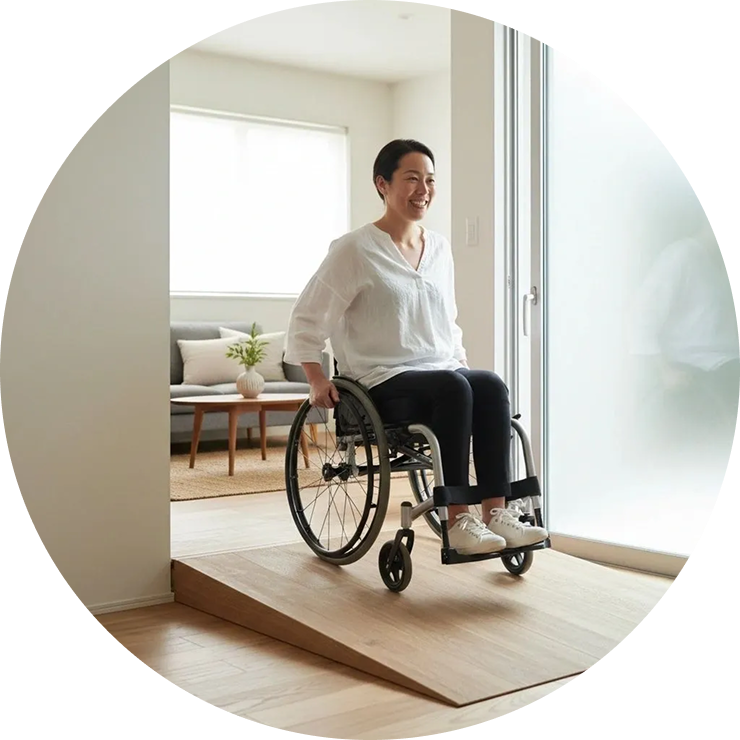
A home and living assessment looks closely at the spaces a person uses every day and how those spaces help or hinder safety, access, and independence. It can be used to evaluate a current home, a planned move, or a future living arrangement under consideration.
Recommendations may cover environmental changes, assistive technology, minor modifications, or the level of daily support that would make routines more workable for everyone involved.
Assessments Tailored to the Question Being Asked
The assessment chosen is guided by the purpose of the referral and what information will be most useful, not by a fixed package. The aim is to gather what you need, without putting anyone through more than is required.


Developmental Assessment
A developmental assessment builds a picture of how a child is tracking across areas such as movement, fine motor skills, play, self-care, executive functioning, and sensory processing.
The report highlights what is going well alongside areas where targeted support may be helpful, giving families and educators a foundation for planning, everyday strategies, and conversations with other professionals.
OT Contribution to Diagnostic Assessments
Where a multidisciplinary diagnostic process is underway, such as an autism or developmental delay assessment, an occupational therapist can contribute valuable information about a person’s everyday functioning.
Standardised tools are used alongside structured observation in real-life environments, helping the wider team see how skills, sensory needs, and participation actually present outside of clinic settings.

School Support Assessment
A school support assessment focuses on how a child or young person is managing the daily demands of school life, including attention, regulation, fine motor and writing tasks, organisation, and social participation in the classroom and playground.
Reports translate observations into clear, practical recommendations that educators can use straight away, and can also support funding or planning processes where eligibility criteria apply.
THOUGHTFUL, COLLABORATIVE, AND GROUNDED IN REAL LIFE
What to Expect From Our Assessment Process
Each assessment is shaped around the person being assessed and the question the referral is asking. Depending on what is needed, the process may include:
- A conversation upfront with you, your family, your school, or your support team to understand the context and the questions you want answered.
- Observation of participation in everyday settings that matter, such as the classroom, home, or community.
- A combination of standardised tools and structured clinical observation, chosen to suit the referral.
- Collaboration with educators, GPs, or other treating professionals where you have given consent.
Throughout the process, the focus stays on how strengths and challenges show up in everyday life, not just how someone performs in a single session.
Clear Information You Can Actually Use
Occupational Therapy Assessment Reports and Recommendations
Every assessment is followed by a written report. We provide assessment reports for a range of uses, suitable for families, educators, planners and GPs.
A report may be used to support:
- Therapy planning, goal setting, and reviewing progress over time.
- Conversations between families, schools, GPs, and other treating professionals.
- NDIS plan applications, plan reviews, and funding requests.
- Planning for transitions, school changes, or new living arrangements.
Recommendations are written to be practical and grounded in the real environments where they will be used.
PRIVATE, MEDICARE, AND NDIS PATHWAYS EXPLAINED
Funding Options for Occupational Therapy Assessments
Occupational therapy assessments may be accessed through one of several funding pathways:
- Private payment, where you cover the assessment directly.
- Medicare, where eligibility criteria are met under a relevant care plan from your GP.
- NDIS, for eligible participants and plan types where assessments are reasonable and necessary.
Funding requirements and any out-of-pocket costs are discussed before the assessment begins, so there are no surprises along the way. If you are not sure which pathway applies, our team can help you work it out.
Frequently Asked Questions
If you are weighing up whether an occupational therapy assessment is the right next step, you are not alone. Below are the questions families, support coordinators, and schools tend to ask before booking.
How Do I Know if My Child Needs an Occupational Therapy Assessment?
If everyday tasks like getting dressed, handwriting, eating, sleeping, or managing emotions feel harder for your child than for others their age, an occupational therapy assessment can help bring some clarity. You do not need a referral or a diagnosis to start. An assessment can also be useful when something has changed at home or school, or when a teacher, GP, or planner has flagged a question worth exploring further.
What Does an Occupational Therapy Assessment Actually Involve?
Most assessments include a parent or client interview, observation of everyday tasks, and a mix of standardised tools and structured clinical observation. Where helpful, the therapist may visit the school or home, or speak with other professionals on your team. The exact process depends on the question being asked. You will be told upfront what to expect, how long it will take, and how the findings will be shared back with you.
Is an Occupational Therapy Assessment Used to Make a Diagnosis?
An occupational therapy assessment does not diagnose conditions on its own. Diagnoses such as autism, ADHD, or developmental delay are made by paediatricians, psychologists, or psychiatrists. What an OT assessment can do is contribute valuable information to a multidisciplinary diagnostic process by detailing how someone manages day-to-day participation, sensory experiences, and functional skills. This information can support the wider team in forming a clearer picture.
Can an OT Assessment Be Used for School or NDIS Funding Support?
Yes. Occupational therapy assessments and reports are commonly used to support NDIS plan applications and reviews, school funding applications, and classroom adjustment plans. The report is written with the audience in mind, so educators can act on the recommendations and planners can see how findings link to participation goals. Specific funding eligibility is decided by the relevant body, but a clear, well-evidenced report gives your application the best chance of being understood.
Do You Provide NDIS Functional Capacity Assessments?
Yes. NDIS functional capacity assessments are one of the assessment types we offer. These look at how a person is managing daily life across self-care, mobility, communication, learning, social participation, and community access, with the findings used to support NDIS planning meetings, plan reviews, and goal development. We will confirm scope, timeframes, and reporting expectations with you or your support coordinator before the assessment is scheduled.
Will the Therapist Speak With My Child's School or Other Professionals?
Only with your written consent. Where you would like the assessment to draw on input from teachers, GPs, paediatricians, or other treating professionals, we can arrange phone calls, written exchanges, or, where useful, school observations. You decide who is involved and what is shared. Nothing is communicated to a third party without your agreement, and you receive a copy of any information that is exchanged.
Do We Have to Start Therapy After the Assessment?
No. An assessment is a standalone service. Some families use the report to inform school planning, NDIS applications, or conversations with other professionals, without starting therapy at all. Others find that the assessment confirms therapy would be useful and choose to continue. Either way, there is no obligation. The next step after the assessment is a conversation about what the findings mean and what options, if any, would actually help.
What if I Am Not Sure Which Type of Assessment We Need?
That is a very common starting point. You do not need to arrive with the right answer. Get in touch and share what is happening, what others have suggested, and what you are hoping to find out. Our team can talk through the options, explain what each assessment is designed to do, and help you decide whether one of our services is the right fit, or whether something else would be more useful first.
How Long Does an Occupational Therapy Assessment Take to Complete?
Most assessments are completed across one to three sessions, plus background reviews and report writing. A short developmental screen may take a single appointment, while a comprehensive functional capacity assessment can include observations across multiple settings and a longer report. You will be given a clear timeframe before booking, including how long the report typically takes once the in-person sessions are finished, so you can plan around school commitments, NDIS deadlines, or upcoming meetings.
BOOK AN APPOINTMENT
Get Started with Learn for Life
Therapy for real life starts here. We make it simple.
1. Send us a referral or enquiry
2. We’ll be in touch within 1–2 business days
3. Meet your therapist, share your goals, and shape a plan together
4. Begin therapy where it suits you best