
Conditions We Support
Daily Living Skills
Getting dressed, making a snack or remembering to brush teeth can quietly wear down how capable and independent your child feels each day. Occupational therapy builds daily living skills one step at a time, so these everyday routines feel more achievable and confidence grows where it matters most.

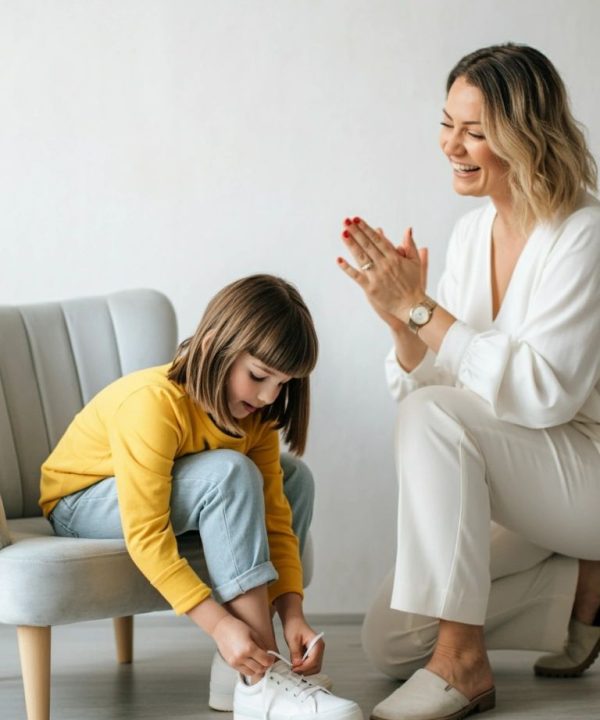
The Everyday Skills That Build Independence
Daily living skills, sometimes called activities of daily living, are the practical tasks we all do to look after ourselves and take part in family and community life. They draw on many underlying skills at once, including motor coordination, planning, sensory processing and confidence, which is why one task can feel easy while another feels like hard work. The areas we most often support include:
- Dressing and undressing: buttons, zips, shoelaces, and getting ready in the right order
- Personal care and hygiene: brushing teeth, washing, hair and toileting routines
- Eating and mealtimes: using cutlery, managing a lunchbox and joining family meals
- Sleep routines: settling, winding down and building healthy sleep associations
- Organising the morning: getting out the door without the daily scramble
- Household and kitchen tasks: simple cooking, chores and looking after belongings
- Community independence: money, transport, appointments and self-advocacy for teens
Because these skills lean on sensory and motor foundations, this work often overlaps with our support for sensory processing and emotional regulation. We look at the whole picture, not just the task in front of us.

When Everyday Tasks Take Extra Effort
Some children breeze through self-care, while others find it takes more time, more support and more patience from everyone. That difference is worth understanding rather than pushing through. You might notice some of these, and it is completely okay if you notice many of them.
- Getting dressed becomes a daily standoff, or clothing feels uncomfortable and is quickly removed
- Cutlery, cups and lunchboxes feel tricky, so mealtimes take longer or get skipped
- Toileting or hygiene routines are hard to establish or remember
- The morning routine falls apart without step-by-step reminders
- A teenager feels unsure about cooking, transport, money or managing their own time
- Your child wants to do it themselves, yet the steps in between feel overwhelming
None of this means your child is behind or not trying hard enough. More often, a skill is still developing and the task is asking more of them than it appears to. When we understand it this way, the pressure eases and we can focus on practical support instead of willpower.

How Our Occupational Therapists Help
We start by getting to know your child and the routines that make up their week, then look at where things feel smooth, where they feel effortful, and which skills would make the biggest difference at home, at school and in the community. From there we build support around the person, breaking each skill into achievable steps and adapting the task so success comes sooner.
Support is always practical and tailored to real life. Depending on your child’s goals, therapy might include:
- Breaking a routine into small, clear steps with visual supports and checklists
- Building the underlying strength, coordination and motor planning a task needs
- Adapting clothing, tools and the environment so a child can succeed more independently
- Gentle, low-pressure approaches to sensory-sensitive tasks like dressing and hygiene
- Practising skills in the real setting, whether that is the bathroom, the kitchen or the shops
- Coaching for teens and young adults on cooking, transport, money and self-advocacy
- Sharing strategies with families and, with your consent, with teachers and support workers
If understanding your child’s strengths and needs first would help, an assessment can be a useful starting point. You can read about the options on our occupational therapy assessments page.
Growing Independence at Every Age
Independence is not a single moment. It is built gradually, and what a child is ready for changes as they grow. We meet each person where they are and work towards the next meaningful step.
Toddlers and Preschoolers
For little ones, daily living skills often begin with dressing, feeding themselves, and early toileting and hygiene routines. We use play and everyday moments to build the coordination and confidence these first skills rely on, so getting ready and mealtimes feel calmer for the whole family.
School-Aged Children
As children start and move through school, independence expands to managing a lunchbox, looking after belongings, dressing for sport, toileting away from home and helping with simple chores. We support these skills so your child can take part confidently, and we can work alongside their classroom through our occupational therapy for school-aged children.
Teenagers and Young Adults
The teenage and young adult years bring bigger independence goals: cooking a meal, catching public transport, managing money and appointments, and speaking up for what they need. We coach teens and young adults to build systems that are genuinely theirs. You can read more on our occupational therapy for teenagers page, and we also support independence for adults through our occupational therapy for adults service.
Skills That Travel Into Real Life
Daily living skills grow best in the places they are actually used, so we bring therapy to where the routines happen. Sessions take place at our Torrensville clinic, or at home, at school, or in your community within a 30-minute radius, and we support families right across metro Adelaide.
Working across settings means a morning routine can be practised at home, dressing for sport can be rehearsed before school, and a first solo bus trip can be planned in the community. This is how a skill learned in one place becomes something your child can do everywhere.
Taking the First Step
You do not need to have everything worked out before you reach out. Here is what happens next:
- Send a referral or enquiry: Tell us as much or as little as you like
- We will be in touch: You will hear from our team within 1 to 2 business days
- Meet your therapist: Share your goals and shape a plan together
- Begin therapy: In clinic, at home, at school, or in the community, wherever suits best
We accept NDIS (self-managed and plan-managed), private, Medicare, private health insurance and Department for Child Protection funding, with details on our services and funding page. You can also explore the full range of needs we work with on our conditions we support page.
Frequently Asked Questions
What Are Daily Living Skills?
Daily living skills, also known as activities of daily living, are the everyday tasks we do to care for ourselves and take part in life. They include dressing, personal hygiene, eating, sleeping and getting organised, and later on cooking, transport, money and appointments. These skills develop gradually across childhood and adolescence, so it is normal for them to still be growing.
How Does Occupational Therapy Help With Daily Living Skills?
Occupational therapists look at the skills underneath a task, such as coordination, planning and sensory processing, then break the task into achievable steps and adapt it so success comes sooner. We practise in the real setting, build the underlying skills, and share strategies with the people around your child, so progress made in a session carries into everyday life.
Do We Need a Diagnosis Before Booking?
No. Many families come to us while they are still working things out, and some never pursue a formal diagnosis at all. Occupational therapy for daily living skills starts with what daily life is asking of your child and where they would like more independence, not with a label. If an assessment would help you understand more, we can talk you through the options.
My Child Wants to Do Things Themselves but Gets Frustrated. Can You Help?
Yes, and that drive to do it themselves is a wonderful starting point. Frustration often means the gap between wanting to and being able to feels too wide right now. We close that gap by breaking the skill into smaller steps, adapting the task, and building the underlying abilities, so your child can experience success and keep their motivation intact.
Can You Support Teenagers Preparing for Independent Living?
Yes. Support for teens and young adults often focuses on cooking, transport, money management, appointments, organisation and self-advocacy, using systems they help design so they are more likely to stick. You can read more on our occupational therapy for teenagers page.
Where Do Sessions Take Place?
Our clinic is in Torrensville, SA 5031, and you are warmly welcome there. We also deliver therapy at home, at school, or in your local community within a 30-minute radius, which helps skills transfer into the places they are needed. We support families across metro Adelaide and are available Monday to Friday, 9am to 5pm, with after-hours or weekend appointments by request.
Can We Use Our NDIS Funding?
Yes. We provide services under the NDIS in line with the NDIS Pricing Arrangements and Price Limits, and we welcome self-managed and plan-managed participants. We also accept private, Medicare (via a Chronic Condition Management Plan determined by your GP), private health insurance and Department for Child Protection funding..
This page is intended for general information purposes only and does not constitute medical advice. Please consult a qualified health professional for advice tailored to your child’s individual needs.